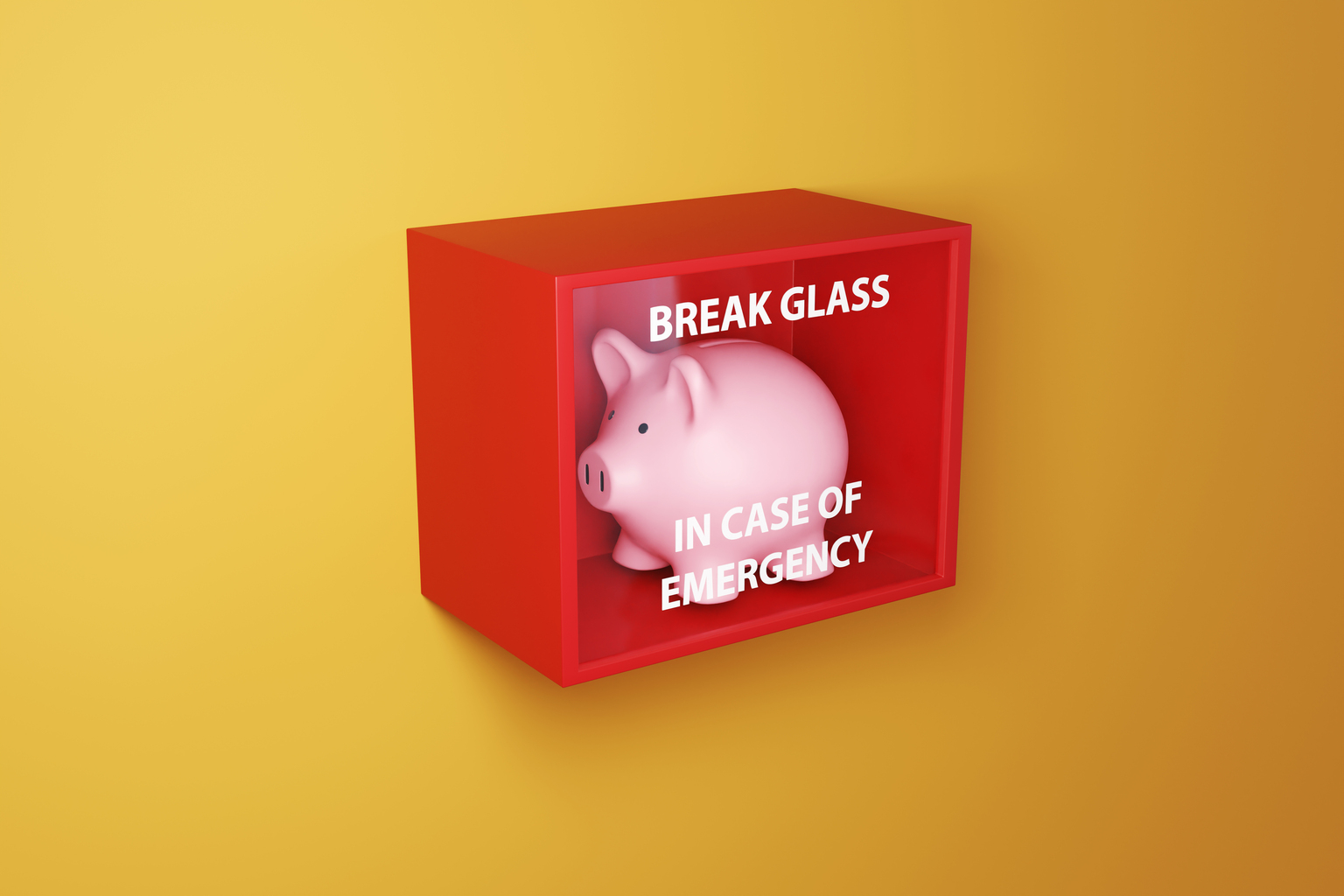
Emergency Fund Guide: How Much Do You Really Need?
You have probably heard the advice: save three to six months of expenses for emergencies. It is one of the most repeated pieces of financial advice in existence. But where does that number actually come from? Is it right for everyone? And what exactly counts as an emergency anyway?
The truth is that the ideal emergency fund size varies enormously depending on your circumstances. A single freelancer with variable income and no safety net needs a very different buffer than a dual-income couple with stable jobs and generous benefits. Let
You have probably heard the advice: save three to six months of expenses for emergencies. It is one of the most repeated pieces of financial advice in existence. But where does that number actually come from? Is it right for everyone? And what exactly counts as an emergency anyway?
The truth is that the ideal emergency fund size varies enormously depending on your circumstances. A single freelancer with variable income and no safety net needs a very different buffer than a dual-income couple with stable jobs and generous benefits. Let us cut through the generic advice and figure out what you actually need.
What Is an Emergency Fund, Really?
An emergency fund is money set aside specifically for genuine, unexpected financial shocks. It is not a holiday fund, not a new laptop fund, and not a general savings account. It exists for one purpose: to stop unexpected events from becoming financial disasters.
True emergencies include things like: sudden job loss, a major car repair you need to get to work, an urgent medical expense, an essential home repair like a boiler breakdown in winter, or an emergency flight to see a family member. If you can see it coming or it is optional, it is not an emergency.
The Standard Advice: Three to Six Months
The three-to-six-months guideline has become standard because it roughly covers the average time it takes to find new employment after a job loss. For many people, this is a sensible target. But let us look at what adjusts this number up or down.
You Might Need Less If:
You are in a dual-income household where one income can cover essential expenses.
You have a very stable job in a high-demand field with strong employment protections.
You have other safety nets like family support, income protection insurance, or generous redundancy terms.
You have minimal fixed obligations like no mortgage, no dependents, and low overheads.
In these situations, three months of essential expenses might be perfectly adequate.
You Might Need More If:
You are self-employed, freelance, or have irregular income.
You are the sole earner in your household.
You work in a volatile industry where job losses happen in waves.
You have dependents, a mortgage, or other significant financial obligations.
You have health conditions that could affect your ability to work.
If several of these apply to you, aim for six to twelve months of essential expenses. The extra buffer accounts for the reality that your financial recovery from a shock could take longer.
Calculate Your Personal Emergency Fund Target
Here is how to calculate your specific number rather than relying on a generic rule of thumb.
Step 1: List your essential monthly expenses. These are the things you absolutely must pay even in a crisis: rent or mortgage, utilities, groceries, insurance, minimum debt payments, transport to work, and any medical costs. Do not include discretionary spending like dining out, entertainment, or subscriptions you could cancel.
Step 2: Decide your coverage period. Use the guidelines above to choose between three, six, nine, or twelve months based on your personal risk factors.
Step 3: Multiply your essential monthly expenses by your chosen number of months. That is your target.
For example, if your essential expenses total $1,800 per month and you decide you need six months of coverage, your emergency fund target is $10,800.
This calculation is straightforward, but getting the essential expenses number right requires careful thought. The Emergency Fund Planner from Finance Scoops walks you through every category of essential spending, helps you distinguish needs from wants, includes scenario planning for different situations, and gives you a personalised target with monthly milestones to reach it. It is just $5.99 and works with both Excel and Google Sheets. You can also start with the free Emergency Fund Calculator at financescoops.com for a quick estimate.
Where to Keep Your Emergency Fund
Your emergency fund needs to be accessible but not too accessible. You want to be able to get the money within a day or two, but you do not want it sitting in your current account where it might get spent on non-emergencies.
The best options are typically high-yield savings accounts or money market accounts. Look for the best interest rate you can find without locking the money away in a certificate of deposit. The purpose of an emergency fund is security, not growth. Avoid investing your emergency fund in the stock market or cryptocurrency, as these are volatile and you might need the money at exactly the moment the market is down.
How to Build Your Emergency Fund From Zero
If you are starting from scratch, looking at a target of $10,000 or more can feel overwhelming. Here is how to make it manageable:
Start with a mini emergency fund. Aim for $1,000 first. This covers most minor emergencies and gives you an immediate safety net while you build toward your full target.
Automate a monthly transfer. Even $50 or $100 a month adds up. Set up a standing order on payday so the money moves before you can spend it.
Direct windfalls to your fund. Tax refunds, birthday money, bonuses, cashback rewards: channel these directly into your emergency fund until it is fully funded.
Temporarily reduce other financial goals. If you are saving for multiple goals, consider pausing or slowing the less urgent ones until your emergency fund is in place. Financial security is the foundation everything else is built on.
When to Use Your Emergency Fund (And When Not To)
The hardest part of having an emergency fund is knowing when to use it. A good test is to ask yourself three questions: Is this unexpected? Is it necessary? Is it urgent? If the answer to all three is yes, use the fund. If any answer is no, find another way to pay for it.
A sale on a new television is not an emergency. Your furnace breaking down in January is. A holiday you forgot to save for is not an emergency. Needing to fly home because a parent is in hospital is.
When you do use your emergency fund, make replenishing it a top financial priority. Pause other savings goals temporarily if needed, and rebuild the fund as quickly as you reasonably can.
The Bottom Line
Your emergency fund is the most important financial asset you will ever build. It is what stands between you and debt when life throws something unexpected your way. Calculate your personal target based on your actual circumstances, start building it today even if you can only manage small amounts, and protect it fiercely for genuine emergencies.
Financial peace of mind is not about having a lot of money. It is about having enough money in the right place at the right time. The Wealth Roadmap Workbook from Finance Scoops dedicates an entire section to building your emergency fund as part of a complete 30-day financial transformation. Check it out at Wealth Workbook.
🛡️ Build your safety net with the Financial Goals Planner Spreadsheet ($5.99)
or get the complete financial toolkit in the Ultimate Finance Scoops Bundle ($64), and save $20, here: The House Down Payment Savings System with Wealth Workbook
Visit financescoops.com to start with our free calculators today.