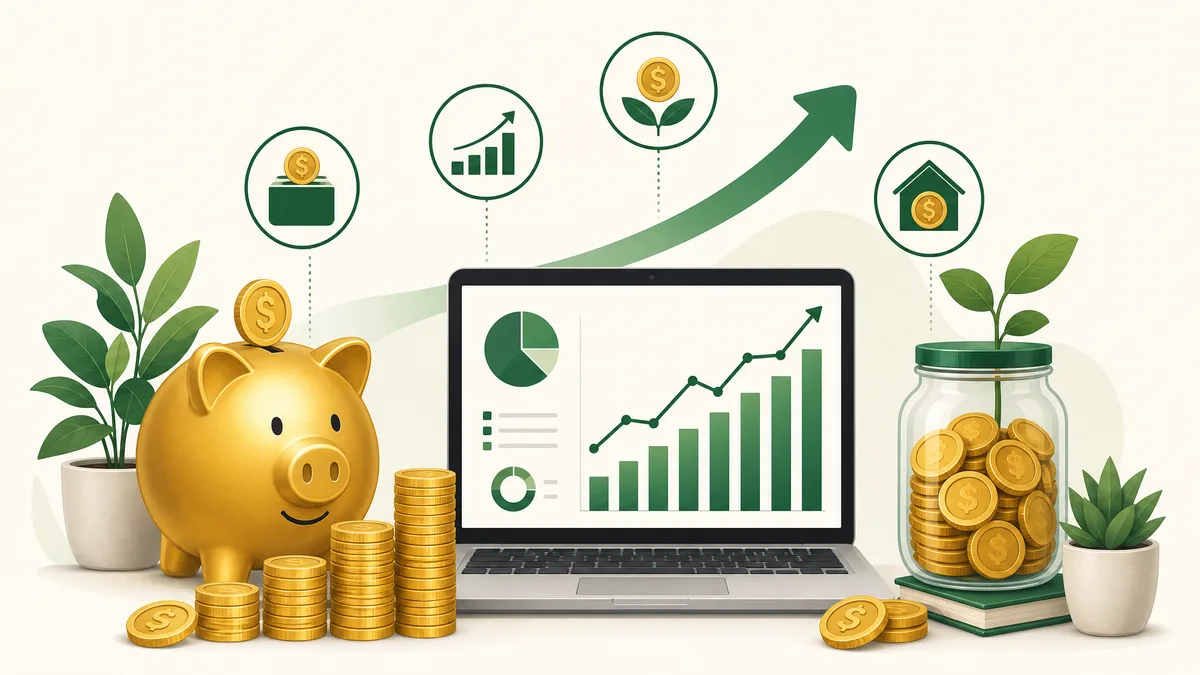
Passive Income Ideas That Actually Fit Your Budget
Passive income has a marketing problem. Scroll through social media and you'd think you need a spare $50,000, a rental property empire, or a viral online course to earn money while you sleep. The reality is far more encouraging: some of the most reliable passive income streams can be started this week with the change already sitting in your checking account.
This guide cuts through the hype and focuses on realistic passive income ideas that actually fit your budget, whether that budget is $0, $50, or $500. You'll learn how much you really need to start, which streams suit your situation, and how to track your progress so your money keeps working harder over time.
What Is Passive Income and Why Does It Matter?
Quick answer: Passive income is money you earn with little to no ongoing daily effort, typically from assets like savings, investments, or products you set up once and continue to profit from over time.
In plain terms, passive income is money that keeps coming in after the upfront work is done. You might set up a high-yield savings account, buy a dividend-paying fund, or create a digital template once, then earn from it month after month without clocking in. That's the opposite of active income, the wages or fees you earn only while you're actively working.
Why does this distinction matter so much? Active income stops the moment you do, whether that's a vacation, an illness, or a layoff. Passive income keeps flowing regardless, which is exactly why it reduces financial stress. Even a small stream that covers your phone bill or a car payment gives you breathing room and a cushion against life's surprises.
The biggest misconception is that passive income requires a large pile of capital to begin. It doesn't. While more money can accelerate your returns, the majority of beginner-friendly options can be started with pocket change. The real currency at the start is consistency, not a big bank balance.
How Much Money Do You Need to Start Earning Passive Income?
The honest answer: far less than you think. Different strategies have wildly different entry points, and several cost nothing at all beyond a little time. Here's a realistic breakdown of low-cost starting points:
- $0 to start: Renting out a spare room or parking space, selling a digital product you create yourself, or opening a high-yield savings account with no minimum.
- $1 to $100: Buying fractional shares of dividend-paying stocks or ETFs, or funding a micro-investing account.
- $100 to $500: Building a small diversified dividend portfolio, or funding a peer-to-peer lending account across several loans to spread risk.
The key takeaway is that most beginner options fall in the $0 to $500 range, making passive income genuinely accessible rather than a rich-person's game. You don't need to wait until you're wealthy to start; you start in order to build wealth.
Before you allocate a single dollar, it helps to know exactly how much surplus you have each month. Tracking your income against your spending reveals the realistic amount you can redirect toward passive income without straining your day-to-day life. A simple monthly cash flow template makes this easy and shows you where small amounts are hiding.
Top Passive Income Ideas for People on a Tight Budget
Here are five proven, budget-friendly passive income streams, ordered roughly from lowest risk and easiest to start to those requiring a bit more effort or capital.
High-Yield Savings Accounts and Cash Parking
The simplest passive income move requires nothing more than moving money you already have. A high-yield savings account (HYSA) pays interest on your balance with essentially zero risk, since deposits at insured banks are protected up to legal limits. You do no work; the bank pays you for parking your cash there.
As of 2024, many high-yield savings accounts offer annual percentage yields (APYs) in the 4% to 5% range, according to Bankrate, compared to the national average savings rate of just 0.6%. That gap is real money: even a modest $1,000 balance earning 4.5% generates about $45 a year for doing absolutely nothing. Larger balances and your emergency fund benefit even more, so this is often the ideal first step.
Dividend Investing with Small Contributions
Dividend investing used to require buying whole shares, which priced out beginners. Today, fractional shares let you invest in dividend-paying stocks and ETFs with as little as $1. Each dividend payment is a small slice of a company's profits paid directly to you, typically every quarter, simply for owning the shares.
Start small and reinvest your dividends to harness compounding, where your payouts buy more shares that generate their own dividends. As your portfolio grows, tracking becomes essential to see which holdings actually deliver. Our guide to dividend income tracking walks you through monitoring payouts so you can spot what's working and reinvest with intention.
Selling Digital Products and Templates
Creating a digital product is one of the purest forms of passive income: you build it once and sell it endlessly with no inventory, shipping, or restocking. A budgeting spreadsheet, a printable planner, a Notion template, or a short guide can be produced with tools you likely already own and sold repeatedly to new buyers.
Finance Scoops is a real-world example of this model. Our finance spreadsheets and planners are created once and made available to anyone who needs them, generating ongoing value without reproducing the work each time. If you have expertise or a knack for organizing information, packaging it into a digital product turns a one-time effort into a lasting income stream.
Peer-to-Peer Lending and Micro-Investing Platforms
Peer-to-peer (P2P) lending platforms let you act as the bank, lending small amounts to borrowers and earning interest in return. Micro-investing apps work similarly for the stock market, rounding up your purchases or accepting tiny deposits and investing them automatically. Both lower the barrier to entry to just a few dollars.
The trade-off is risk: P2P borrowers can default, and micro-investments rise and fall with the market, so these are not guaranteed like a savings account. The smart approach is to start with small amounts you can afford to lose while you learn how each platform behaves, then scale up only once you understand the risks and returns.
Renting Out Assets You Already Own
Some of the best passive income requires no new investment at all, just monetizing what you already have. A spare room can be rented to a lodger or short-term guest, an unused parking space or driveway can be rented in busy areas, and equipment like tools, cameras, or camping gear can be listed on rental marketplaces.
Because you already own the asset, your upfront cost is effectively zero and nearly all the income is profit. This is one of the fastest ways for budget-conscious beginners to generate real cash flow, and it often uncovers value in things that were previously just sitting idle.
Comparing Passive Income Streams by Cost, Time, and Risk
Not every stream suits every person. Use this quick comparison to weigh each option against your budget, available time, and comfort with risk:
| Passive Income Stream | Startup Cost | Time to Set Up | Risk Level |
|---|---|---|---|
| High-Yield Savings Account | $0+ | Low (under an hour) | Very Low |
| Dividend Investing (fractional shares) | $1+ | Low | Medium |
| Digital Products & Templates | $0 to $50 | High (upfront effort) | Low |
| Peer-to-Peer Lending / Micro-Investing | $5 to $500 | Low to Medium | Medium to High |
| Renting Out Owned Assets | $0 (already owned) | Low to Medium | Low |
There's no single "best" option; the right choice depends on which column matters most to you right now. Someone with time but no money might start with digital products, while someone with a little cash and low risk tolerance might begin with a high-yield savings account.
How to Choose the Right Passive Income Stream for You
With so many options, the smartest move is to match a stream to your personal situation rather than chasing whatever sounds most exciting. Run each idea through this simple four-part framework:
- Time available: Digital products demand significant upfront effort but little maintenance, while a savings account takes minutes to set up. Be honest about the hours you can commit.
- Upfront capital: If you have $0, focus on renting assets you own or creating a product. If you have a few hundred dollars, dividend investing becomes an option.
- Risk tolerance: Savings accounts are nearly risk-free; P2P lending and stocks carry the possibility of loss. Choose what lets you sleep at night.
- Skill set: Lean into what you already know. A spreadsheet wizard should build templates; a confident investor might prioritize dividends.
Above all, resist the urge to launch five streams at once. Start with a single option, learn it thoroughly, and let it stabilize before diversifying. If investing is where you want to begin, our guide on how to start investing with a clear plan will help you take that first step with confidence.
How to Track and Grow Your Passive Income Over Time
Passive income isn't truly "set it and forget it." The streams that thrive are the ones you monitor, because tracking reveals what's actually working and where your money is being wasted. Reviewing your income monthly lets you double down on winners and quietly retire the streams that aren't pulling their weight.
Two tools make this simple. A net worth tracker shows the big picture of how your assets are growing as passive income compounds, and an investment tracker breaks down the performance of each holding. Together they turn a vague sense of progress into clear, motivating numbers.
To watch your overall financial picture improve, use a net worth tracker spreadsheet that ties everything together. And to keep a close eye on your dividend and market-based income specifically, an investment portfolio tracker spreadsheet shows exactly how each investment contributes to your monthly cash flow.
Common Mistakes to Avoid When Building Passive Income
A few predictable errors trip up most beginners. Steering clear of them will save you money and frustration:
- Chasing sky-high returns: If a scheme promises guaranteed double-digit returns with no risk, it's a warning sign, not an opportunity. Sustainable passive income grows steadily, not overnight.
- Ignoring taxes: Most passive income is taxable, and failing to plan for it can lead to an unwelcome bill. Factor taxes into your expectations from day one.
- Spreading too thin, too fast: Launching several streams simultaneously usually means none of them get the attention they need. Master one before adding another.
- Confusing passive with effortless: Even the best streams need occasional check-ins. A little ongoing attention protects your returns.
The antidote to all of these is a steady, informed approach rooted in financial literacy. Understand each stream before you commit, keep your expectations realistic, and let time and consistency do the heavy lifting.
Is Passive Income Enough to Reach Financial Independence?
Passive income is a powerful tool, but it's rarely the whole story. On its own, the modest streams most people start with won't replace a full salary for years. Where it shines is as one engine within a broader plan, steadily reducing your reliance on a paycheck while your invested assets compound in the background.
Think of passive income as an accelerator rather than a standalone solution. Combined with a healthy savings rate, smart investing, and controlled expenses, it becomes a key pillar of long-term freedom. To see how these pieces fit together into a complete roadmap, read our guide on building a financial independence plan and position your passive income as part of a well-rounded strategy.
Frequently Asked Questions
What is the easiest passive income stream to start with no money?
The easiest no-money option is renting out an asset you already own, such as a spare room, a parking space, or unused equipment, because your upfront cost is zero and nearly all the income is profit. A close second is opening a high-yield savings account with no minimum deposit, which starts earning interest as soon as you move existing cash into it. Both require little effort and no new capital, making them ideal first steps for beginners.
How long does it take to see real returns from passive income?
It depends on the stream. A high-yield savings account starts paying interest within the first month, while dividend investing typically pays quarterly and grows meaningfully over years as you reinvest. Digital products may earn little at first and then build steadily as more people discover them. In general, expect small early returns that compound into significant income only with consistency and patience over months and years, not days.
Can passive income replace my full-time salary?
It can, but usually not quickly and not with a small starting budget. Replacing a full salary requires substantial invested assets or a highly successful product, which takes years of consistent saving and reinvesting to build. Most people first use passive income to cover specific bills or supplement their earnings, then grow it over time. Treat full salary replacement as a long-term goal rather than a short-term expectation.
What tools can I use to track my passive income each month?
A net worth tracker gives you the big-picture view of how your assets and income are growing, while an investment portfolio tracker breaks down the performance of individual dividend and market-based holdings. A monthly cash flow template also helps you see how much surplus you can redirect into new streams. Using these tools consistently turns a vague sense of progress into clear numbers you can act on.
Is dividend investing a good passive income strategy for beginners?
Yes, dividend investing is one of the most beginner-friendly strategies because fractional shares let you start with as little as $1 and reinvest your payouts to compound over time. It does carry market risk, meaning your holdings can lose value, so it's best approached with a long-term mindset and a diversified mix of stocks or ETFs rather than betting on a single company. Start small, reinvest, and track your results.
How do I know which passive income idea fits my current budget?
Start by tracking your monthly cash flow to see how much surplus you realistically have, then match that amount to a stream's startup cost. With $0, focus on renting owned assets or creating a digital product; with a small amount, fractional dividend investing or a high-yield savings account works well. Also weigh your available time and risk tolerance, and begin with the single option that best fits all three.
Do I need to pay taxes on passive income?
In most cases, yes. Interest from savings, dividends from investments, rental income, and profits from digital products are generally taxable, though the specific rate and rules vary by income type and your location. It's wise to set aside a portion of your passive earnings for taxes and to keep clear records. For anything complex or high-value, consult a qualified tax professional to make sure you stay compliant.
The Bottom Line
Passive income isn't reserved for the wealthy, it's built by ordinary people who start small and stay consistent. Whether you begin by moving your emergency fund into a high-yield savings account, buying your first $5 of dividend shares, or renting out a spare room, the important thing is to start with one stream that fits your budget today. Track your progress, avoid the common traps, and let compounding do its quiet work.
Have a passive income idea that's working for you, or a question about getting started? Share your experience in the comments below, we'd love to hear what fits your budget and learn from your journey.