What Is Financial Planning and Why Does It Matter?
Financial planning sounds like something reserved for the wealthy or for people with a finance degree, but it's really just a roadmap for your money. Whether you earn a little or a lot, having a plan is what turns financial stress into financial confidence. This guide explains what financial planning is, why it matters, and exactly how to start one, all in plain English.
What Is Financial Planning?
Definition: Financial planning is the process of setting money goals and creating a clear roadmap to achieve them, covering budgeting, saving, debt management, investing, and retirement.
At its core, financial planning is simply deciding what you want your money to do and then organizing your finances to make it happen. It ties together the everyday pieces, like your budget and savings, with the bigger pieces, like paying off debt and preparing for retirement, into one coherent strategy.
Here's the most important thing to understand: financial planning is not just for the wealthy. It's for anyone who wants to feel more in control of their money, reduce stress, and make steady progress toward the life they want. You don't need a high income or a complicated portfolio to benefit; you just need a plan.
Why Does Financial Planning Matter?
Financial planning matters because it replaces uncertainty with direction. When you have a plan, you know where your money is going and why, which dramatically reduces the stress and anxiety that come from financial guesswork. Instead of reacting to every bill and emergency, you're steering with purpose.
Without a plan, people are far more likely to overspend, under-save, and miss important milestones like building an emergency fund or investing for retirement. A plan acts as a filter for decisions, helping you say yes to what matters and no to what doesn't.
The evidence backs this up. According to a 2023 Charles Schwab survey, people with a written financial plan tend to feel more financially stable and are more likely to save consistently than those without one. Simply putting your plan in writing measurably improves your odds of success.
Key takeaway: A financial plan reduces stress, prevents costly mistakes, and makes consistent progress far more likely.
What Are the Key Components of a Financial Plan?
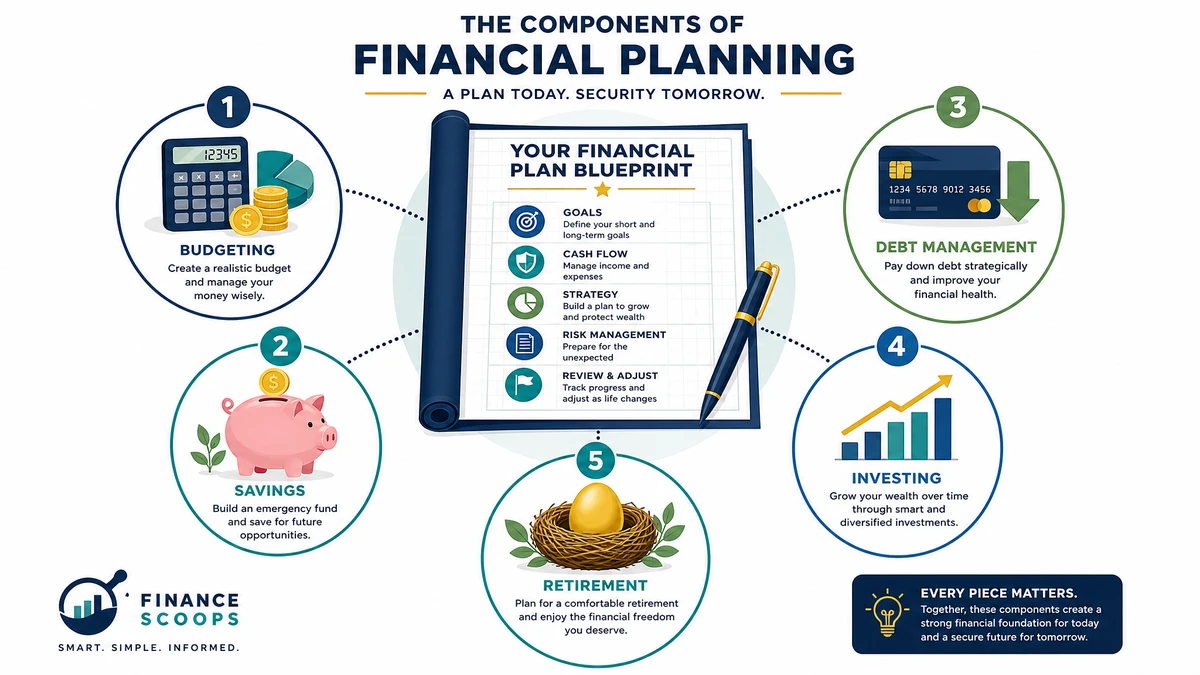
A complete financial plan rests on five core pillars. You don't have to master them all at once, but understanding each one helps you see the full picture.
Budgeting and Expense Tracking
Budgeting is the foundation of any solid financial plan because it shows you exactly where your money goes. By tracking income versus expenses, you can spot leaks, redirect money toward your goals, and make intentional choices instead of wondering where your paycheck disappeared. If you're new to this, our guide on how to start budgeting walks you through it step by step.
Savings Goals and Emergency Funds
Saving turns your plan from theory into security. This includes short-term goals as well as an emergency fund, which is your financial safety net. A common guideline is to save three to six months of expenses so an unexpected event doesn't derail you. Our guide on how much your emergency fund should be helps you set the right target.
Debt Management
Addressing debt is a critical part of financial planning because high-interest balances quietly drain the money you could be saving or investing. Strategies like the debt snowball and debt avalanche give you a structured way to pay it down. For a deeper look, see our overview of debt payoff methods that work.
Investing and Wealth Building
Once your foundation is in place, investing is how you build real, lasting wealth. Even small, consistent investments can grow meaningfully over time thanks to compound interest, which lets your money earn returns on its own returns. Learn the basics in our guide on how to start investing with a clear plan.
Retirement Planning
Planning for retirement is part of financial planning at every stage of life, not just as you near retirement age. The earlier you start, the more compound growth works in your favor. Our guide on when to start retirement planning explains why now is almost always the right time.
How Do You Start a Financial Plan?
Starting a financial plan is more approachable than it sounds. Follow this simple sequence:
- Assess your current situation by listing your income, expenses, debts, and savings.
- Set clear goals, both short-term and long-term, with real numbers and dates.
- Build a budget that directs money toward those goals.
- Tackle your debt, starting with the highest-interest balances.
- Save consistently, automating contributions wherever you can.
- Revisit the plan regularly and adjust as life changes.
The most important step is simply starting. A plan you begin today beats a perfect plan you never get around to. For help with the budgeting piece, see our guide on how to create a personal budget that works.
Key takeaway: Start where you are, keep it simple, and improve the plan over time.
What Tools Can Help You Stick to a Financial Plan?
The right tools make a financial plan actionable and easy to track. Spreadsheets, calculators, and planners take the guesswork out of your numbers and keep your goals visible. Finance Scoops offers free calculators and premium planners designed exactly for this purpose.
A free budget calculator helps you understand your cash flow in minutes, while a structured financial goals planner keeps every goal and milestone organized in one place. Using tools like these turns your plan from a document you forget into a system you actually follow.
How Often Should You Review Your Financial Plan?
A financial plan is not a one-time exercise; it's a living document that should grow with you. Review it at least once a year, and any time you experience a major life change such as a new job, marriage, a move, or having a child. These moments often shift your income, expenses, and priorities.
Regular reviews keep your plan aligned with your real life so it stays useful instead of gathering dust. An annual financial planning checklist makes this yearly check-in quick and thorough.
Key takeaway: Treat your plan as a living document and revisit it at least annually.
Financial Planning for Different Life Stages
Financial planning looks different in your 20s than it does in your 40s or 60s, and that's exactly how it should be. Early on, the focus is often on building an emergency fund, managing student debt, and starting to invest. In your middle years, it shifts toward maximizing retirement savings and protecting your growing assets. Nearer retirement, the emphasis moves to preserving wealth and planning income.
Yet the core principles, spend less than you earn, save consistently, manage debt, and invest for the future, remain the same at every age. Regardless of your stage in life, the best time to start planning is now.
Frequently Asked Questions
What is the difference between financial planning and budgeting?
Budgeting is one part of financial planning, not the whole thing. A budget focuses specifically on managing your day-to-day income and expenses, while financial planning is the broader process that also includes saving, debt management, investing, and retirement. Think of budgeting as one essential tool within your larger financial plan. You need the budget to execute the plan, but the plan gives that budget its direction and purpose.
Do I need a financial advisor to create a financial plan?
No, many people successfully create and manage their own financial plans using free tools, calculators, and educational guides. A basic plan covering budgeting, saving, debt, and investing is well within reach for most people on their own. That said, a financial advisor can add value if your situation is complex, such as owning a business, managing significant investments, or navigating major tax decisions. For everyday planning, self-directed tools are often more than enough.
How long does it take to see results from a financial plan?
You'll often feel the psychological benefits, like reduced stress and greater clarity, almost immediately once you have a plan in place. Tangible financial results, such as a fully funded emergency fund or noticeable debt reduction, typically take several months to a few years depending on your goals and income. The key is consistency; small, steady actions compound into significant progress over time. Patience and persistence are what turn a plan into real change.
What is the most important part of a financial plan?
Budgeting is usually considered the foundation, because you can't save, invest, or pay off debt effectively without knowing where your money goes. That said, the single most important thing is simply having a plan and taking action on it. A modest plan you actually follow beats an elaborate one that stays on paper. Once your budget is in place, an emergency fund is often the next most important priority for stability.
Can financial planning help me get out of debt faster?
Yes, financial planning is one of the most effective ways to accelerate debt payoff. A plan helps you free up money through budgeting, choose a proven repayment strategy like the snowball or avalanche method, and stay consistent until the debt is gone. By giving your dollars clear direction, planning ensures more of your money goes toward eliminating debt instead of slipping away on unplanned spending.
Is financial planning only for people with high incomes?
Not at all. Financial planning is arguably even more valuable for people with modest or tight incomes, because it helps every dollar work as hard as possible. A plan helps you prioritize spending, build savings gradually, and avoid costly debt, regardless of how much you earn. In fact, the habits you build through planning on a smaller income are exactly what create lasting financial security over time.
What happens if I don't follow my financial plan perfectly?
That's completely normal, and it's not a reason to give up. No one follows a financial plan flawlessly, because life is unpredictable. The point of a plan is to give you a direction to return to after setbacks, not to demand perfection. When you overspend or miss a savings goal, simply review what happened, adjust your plan, and keep going. Consistency over the long run matters far more than any single month.
The Bottom Line
Financial planning isn't about being wealthy or being an expert; it's about creating a simple roadmap for your money and following it. Assess where you are, set clear goals, build a budget, manage debt, save consistently, and review your plan regularly. The best time to start is right now. Take the first step today with our free budget calculator and keep your goals on track with a financial goals planner.